
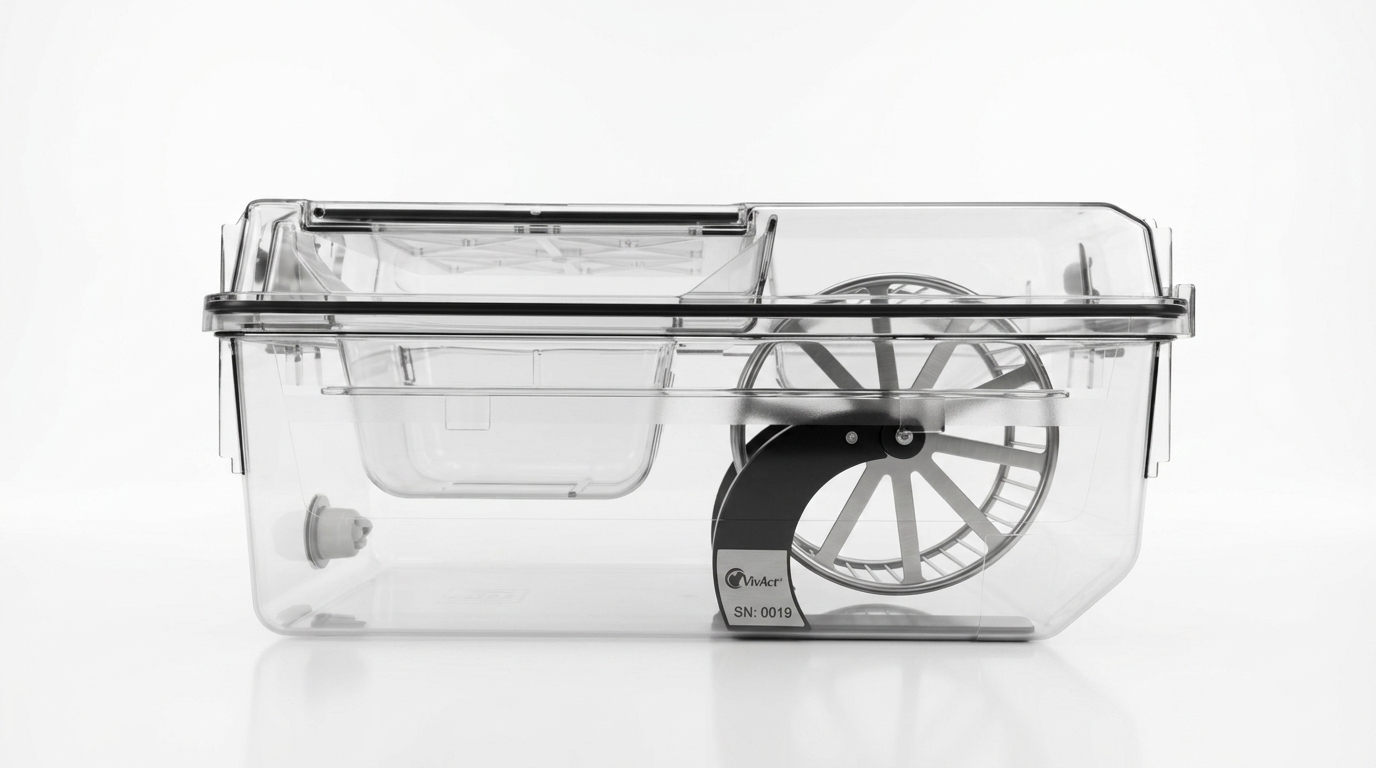

VivAct inside IVC cage
RODENT LABORATORY CAGE MONITORING

Objective Rodent Locomotor Telemetry — Directly in Your Laboratory Cage

Wireless running wheel platform for continuous longitudinal quantification of voluntary rodent activity. High temporal bout resolution, multi-month battery autonomy, on-board flash backup, automatic wireless synchronization, and open CSV export — housed in a compact chassis engineered for demanding vivarium workflows, including IVC systems.

Laboratory Cage Monitoring Paradigm: Minimizing Transfer Disturbance & Novelty Artifacts

Transferring mice to separate recording chambers or metabolic cages induces handling stress and behavioral novelty artifacts. VivAct™ operates directly inside your laboratory cage environment: animals remain undisturbed, yielding clean, reproducible longitudinal data without handling confounds.

Multi-Month
Calculated Autonomy
< 150 g
Wheel Rotating Mass
Wi-Fi 4
2.4 GHz Burst Sync
Open CSV
Transparent Data Export
Request Technical Datasheet (PDF) → Explore Live Telemetry Data
REAL PRODUCT / 001
modeLABORATORY CAGE / IVC
resolutionBOUT TIMING / ms
exportOPEN CSV

Standard limitations.
VivAct™ solutions.

Typical Limitations in Locomotor Monitoring — And How VivAct™ Solves Them

Recording voluntary rodent running demands rigorous consideration of biomechanics, strict vivarium hygiene protocols, and minimization of animal handling stress.
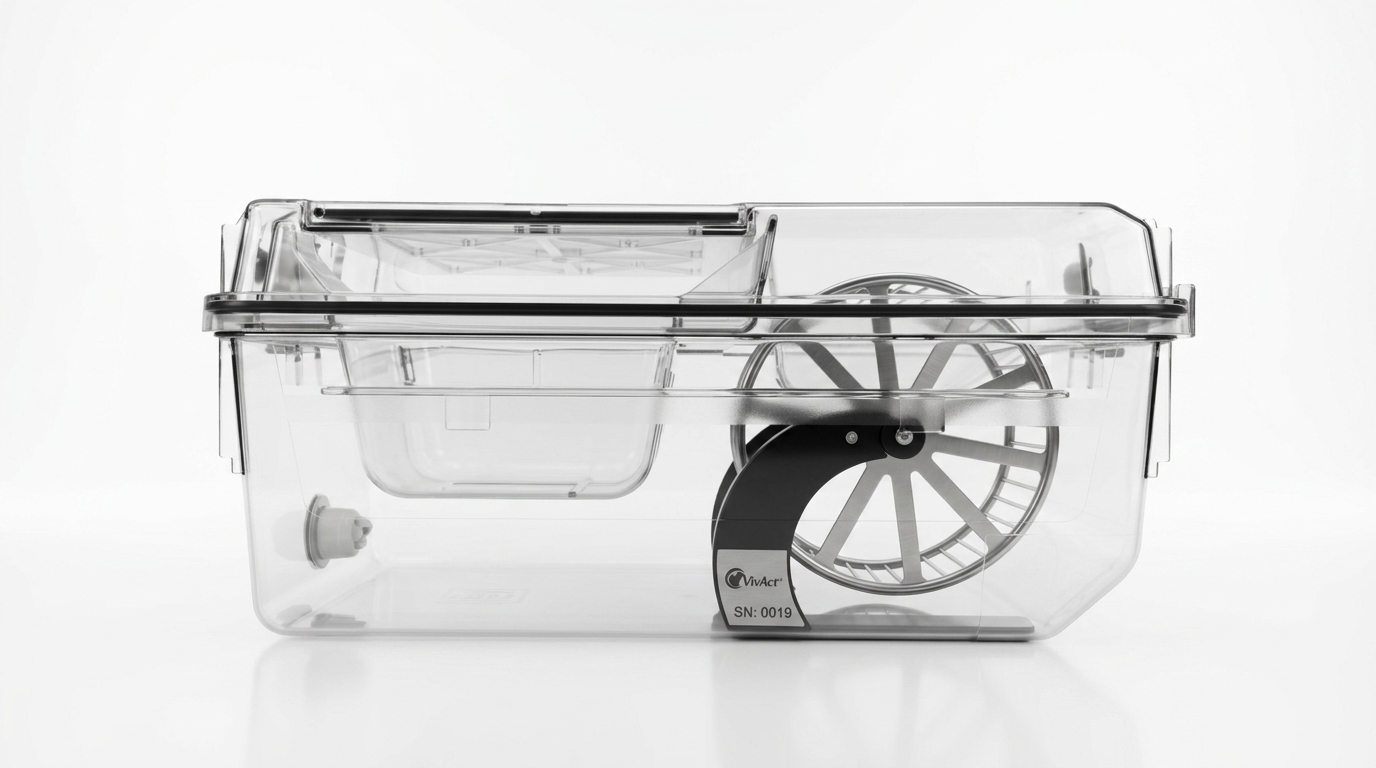
VivAct™ inside a laboratory cage
VivAct™ inside standard cage: compact placement without obstructing feeder hopper, water lixit, or ventilation airflows.
01 / Biomechanics & Inertia

High Starting Resistance and Inertia

Heavy Solid Drums: High initial inertia requires excessive torque. In disease models with motor impairment (oncology, sarcopenia, neurodegeneration), animals cease running prematurely, obscuring subtle phenotypic deficits.
VivAct™ Solution: All-metal low-mass wheel (150 g) on a dry brass/PTFE friction pair minimizes breakaway resistance, enabling natural locomotion even in frail animals and 20–35 g mice.
02 / Positional Stability

Wandering and Bedding Vibration

Lightweight Plastic Stands: Vibrate and wander across woodchip bedding during vigorous nocturnal bouts, tipping over or obstructing feeder hoppers.
VivAct™ Solution: Low center of gravity, 520 g total unit mass, and elastomer dampening feet eliminate drift and tipping on deep bedding during maximum running velocities.
03 / Biosecurity & Disinfection

Aggressive Chemical Disinfection

Exposed Electronics: Open circuit boards, unsealed connectors, and ball bearings rapidly corrode when exposed to quaternary ammonium solutions, ammonia vapors, and alcohol wipes.
VivAct™ Solution: Solid resin compound encapsulation engineered for high chemical resistance against 70% alcohol (ethanol/IPA) and quaternary ammonium compounds (QAC).
04 / Animal Welfare & Protocol

Handling Stress from Frequent Battery Swaps

Short Battery Life: Depletion within 1–2 weeks forces frequent cage openings, disrupting nest architecture, pheromone cues, and introducing handling artifacts.
VivAct™ Solution: Multi-month operating autonomy enables continuous longitudinal protocols without unnecessary cage entries or study interruptions.

Methodological Principle: VivAct™ measures voluntary locomotion in the laboratory cage without forced exercise, providing an authentic physiological locomotion profile.
03 / SIGNAL PIPELINE INTERACTIVE TELEMETRY OPEN SCIENTIFIC CSV

Signal Pipeline: From Animal Locomotion to Publication-Ready Data

Every stage — from mechanical pulse to structured CSV output — is fully transparent and reproducible. Telemetry is automatically synchronized with VivAct Cloud/Gateway and backed up in on-board Flash memory.

'01 Placement Wheel Mechanics
'02 Smartphone VivAct Setup
'03 2.4 GHz Wi-Fi Facility IoT VLAN
MCU1 ms
'04 MCU Engine Timestamping
FLASH
'05 Flash Memory Local Storage
'06 Burst Sync Batch Transfer
'07 Cloud & CSV VivAct Cloud
Step 01 / Mechanics Wheel & Chassis Placement

Position inside laboratory cage and activate. Dry PTFE/brass sliding friction pair ensures ultra-low breakaway torque without lubrication.

Step 02 / Mobile Setup Smartphone Onboarding

Initial setup and device assignment via smartphone in the VivAct Setup mobile app or captive web portal.

Step 03 / Facility Wi-Fi 2.4 GHz Network Config

Secure connection credentials stored for vivarium networks (WPA2-PSK / dedicated isolated laboratory IoT VLAN).

Step 04 / On-Board MCU Microcontroller Engine (MCU)

Millisecond event timestamping, real-time kinematic calculations, and peak speed computation directly on-board.

Step 05 / Flash Backup Autonomous Flash Memory

Non-volatile local data buffering prevents data loss during temporary network disconnects or vivarium access outages.

Step 06 / Burst Sync Scheduled Batch Sync

Energy-efficient scheduled Wi-Fi burst transmission minimizing total vivarium radio frequency exposure.

Step 07 / Cloud & CSV VivAct Cloud & Open CSV

Cohort analytics on VivAct Cloud and direct structured export for R (tidyverse), Python (pandas), MATLAB, and Prism.

TELEMETRY READY All 4,239 Bout Series Available in the Interactive VivAct™ Terminal

Explore software analytics for 7-day circadian actograms, bout fatigue kinematics, and direct raw CSV dataset export.

Device Architecture and Technical Specifications

Every element of VivAct™ is engineered for rodent biomechanics and strict vivarium hygiene SOPs.

01 / Wheel Inertia

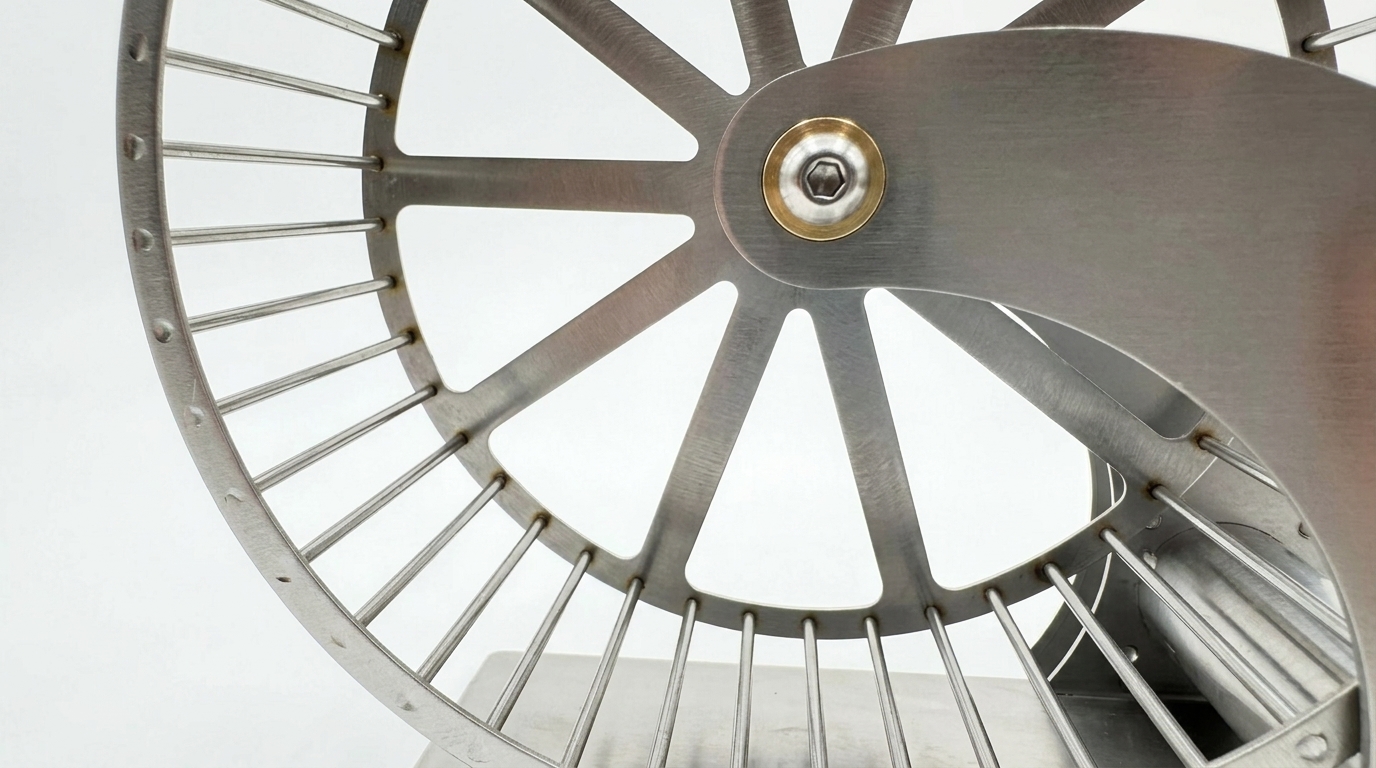
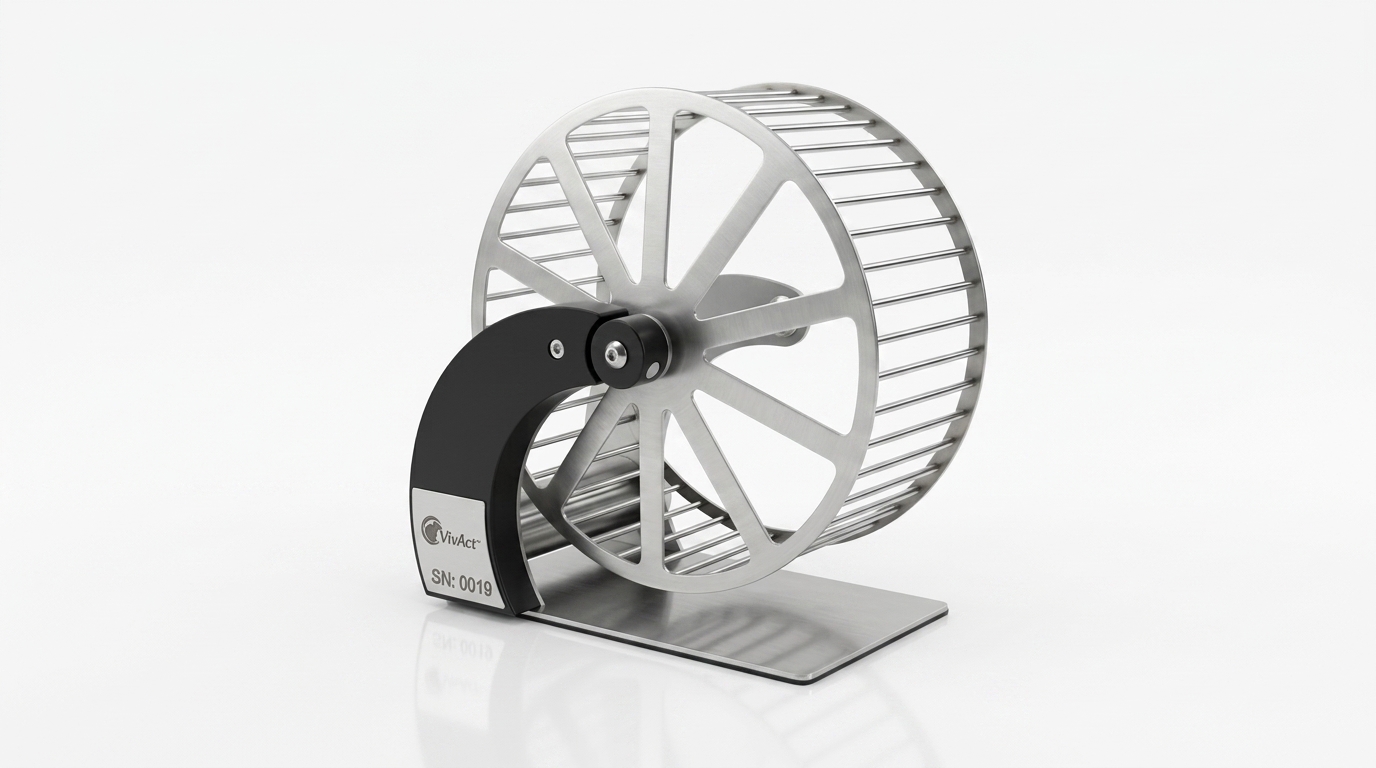
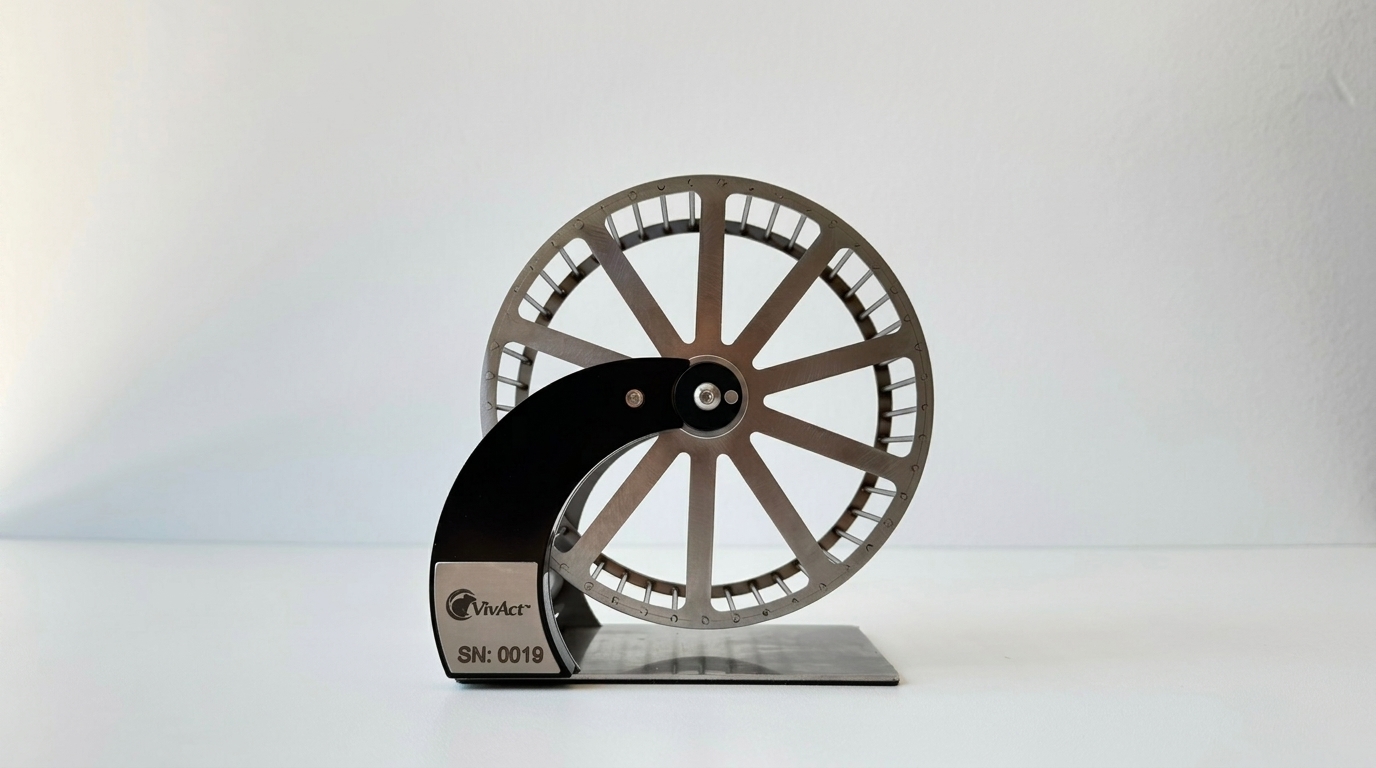
Lightweight Stainless Wheel

Reduced rotating rim mass (150 grams) while maintaining a rigid monolithic structure significantly decreases inertial load.

  • Safe 9 mm rung spacing for paws and tail
  • Zero rotational residual imbalance
  • Monolithic stainless steel construction
02 / Pivot Node

Brass + PTFE Friction Pair

Avoiding ball bearings in favor of a dry self-lubricating sliding pair eliminates seizure from bedding dust and ammonia corrosion.

  • Stable friction coefficient without grease
  • Whisper-quiet rotation during dark phase
  • Immune to woodchip bedding contamination
03 / Sealed Housing

Resin Casting & Type-C Port

Electronic module is monolithically cast in solid resin. Battery charging is performed via standard USB Type-C under a sealed screw cap.

  • Convenient charging with standard Type-C cable
  • Isolated from wash solutions and rodent urine
  • High resistance to 70% alcohol and QACs
Parameter Value / Specification Engineering Notes
Wheel Diameter 135 mm (effective circumference 0.4084 m) Validated track geometry for 20–35 g mice
Track Width / Rung Spacing 56 mm / 9 mm Prevents paw and tail pinch during sprint bouts
Rotor Mass 150 g (stainless steel) Low-inertia monolithic structure for minimal breakaway torque
Total Unit Mass 520 g Low center of gravity; elastomer feet eliminate bedding drift
Rotation Sensor Contactless sealed magnetic sensor Encapsulated in polymer resin; protected from dust and moisture
Wireless Connectivity Wi-Fi 4 (802.11 b/g/n, 2.4 GHz, WPA2-PSK) Burst transmission; reliable in enterprise laboratory networks
Charging Interface USB Type-C with screw cap & O-ring Threaded waterproof cap protects during chemical wipe-downs
Dimensions & Compatibility 148 × 146 × 86 mm Validated for Tecniplast GM500; others verified upon request
Sanitation Protocol Chemical wipe-down (70% alcohol, QAC) & UV-C Autoclaving is STRICTLY PROHIBITED (heat damages seals/battery)
CAD MODELING & FOOTPRINT

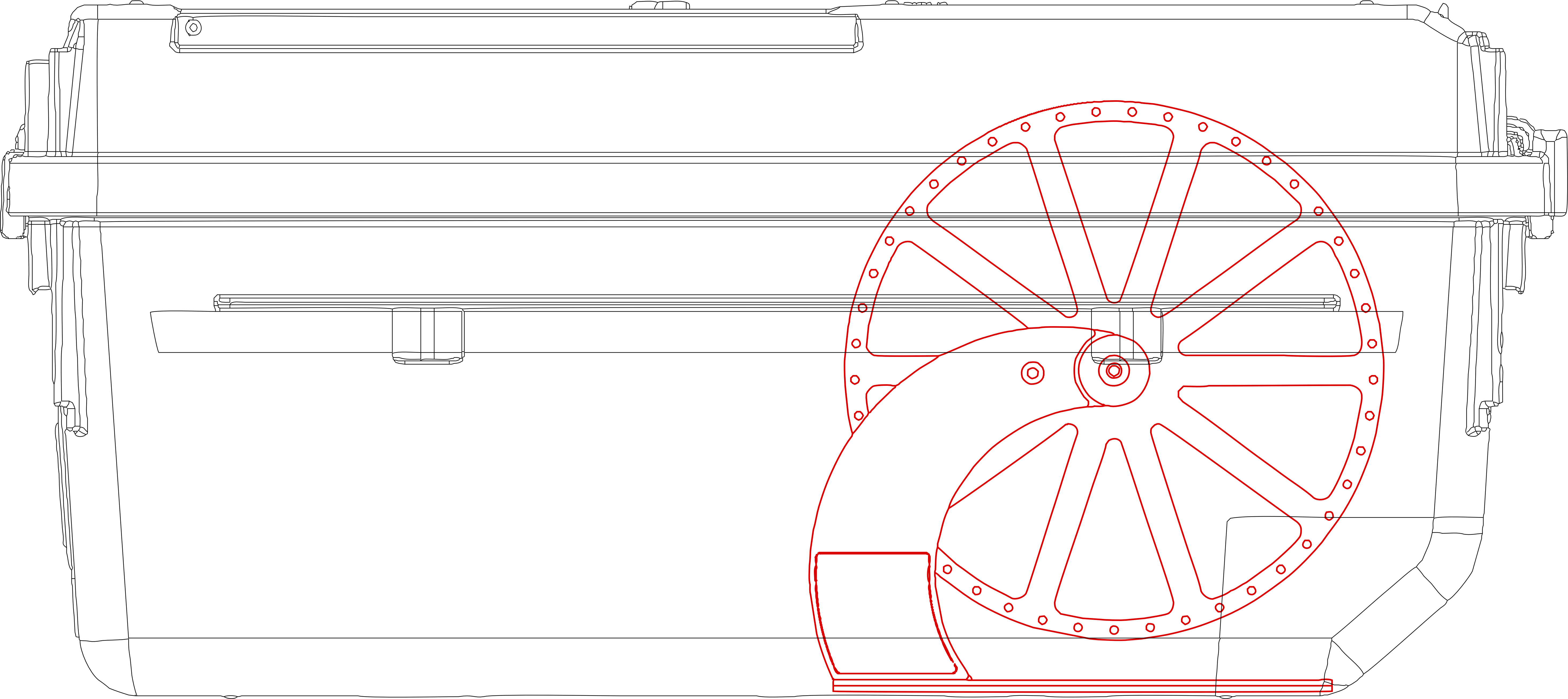
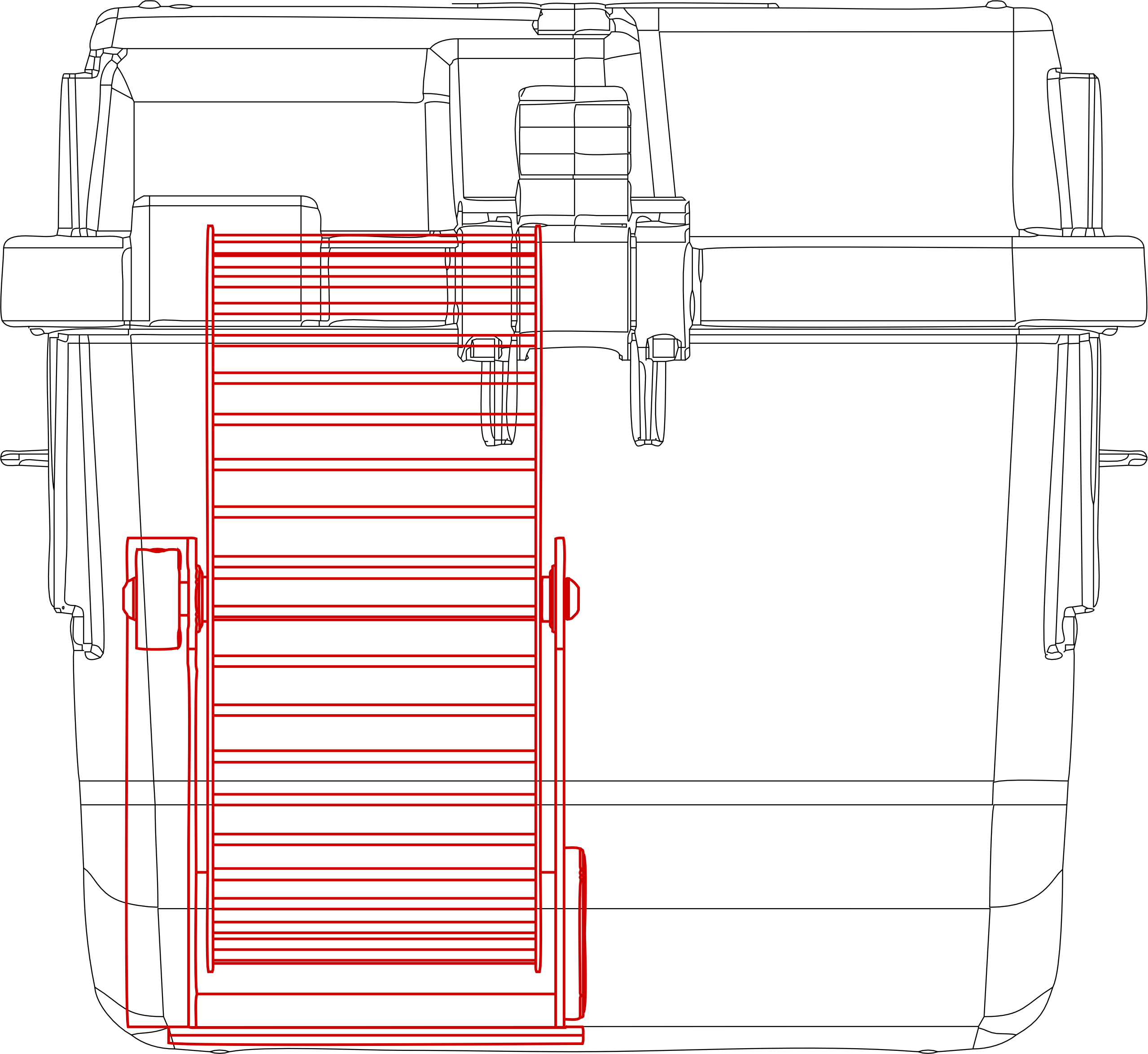
Engineering Blueprint in Laboratory Cage (Tecniplast GM500)

VivAct™ footprint (148 × 146 × 86 mm) is engineered for Tecniplast GM500 cages. The base occupies only ~21% of the floor area (105.8 cm² of 500.7 cm²), preserving ~79% free space for nesting, bedding, and unobstructed animal movement.

Longitudinal Cage Profile Side View
VivAct™ cage placement schematic — side view
Longitudinal Placement: length 146 mm, height 148 mm. Positioned along the perimeter, maintaining safe clearance to the top wire lid and preserving cage volume.
Cross-Sectional Cage Profile Front View
VivAct™ cage placement schematic — front view
Lateral Positioning: base width 86 mm (track 56 mm). Aligns snugly against the side wall without obstructing feeder hopper, water bottle, or air valves.

🛠 Need custom geometry or rat cage adaptation?

VivAct™ is engineered as a versatile platform. For non-standard cage geometries, larger rodents (rats), or specific protocols, S2P provides custom engineering: wheel diameter scaling (up to 300 mm), track width modification, custom base geometry, and bracket mounts.

Request Custom Fit →
HYGIENE & DISINFECTION PROTOCOL

3-Step Protocol for Sanitary Disinfection (SOP)

Standardized cleaning and decontamination procedure between experimental cohorts without risking electronics damage or metrological drift.

STEP 01 / PORT PROTECTION

1. Check Protective Cap

Prior to cleaning, ensure the threaded USB Type-C protective cap is securely tightened against the silicone O-ring gasket, guaranteeing enclosure seal.

STEP 02 / CHEMICAL DECONTAMINATION

2. Chemical Disinfection

Wipe down external surfaces or briefly rinse with 70% alcohol (ethanol/IPA) or quaternary ammonium solutions (QAC). Do not soak the device.

STEP 03 / UV-C EXPOSURE & DRYING

3. UV-C Irradiation & Air Drying

Air-dry thoroughly and perform final germicidal decontamination under a UV-C lamp in a laminar flow hood according to standard facility SOPs.

⚠️
Critical Protocol Requirement: Autoclaving is STRICTLY PROHIBITED. High-temperature pressurized steam sterilization permanently destroys the silicone O-ring seals and monolithic polymer compound.

Telemetry Parameters and Bout Kinematics Analysis

VivAct™ registers the micro-structure of every running bout: start timestamp, duration in ms, distance, peak velocity, and circadian phase.

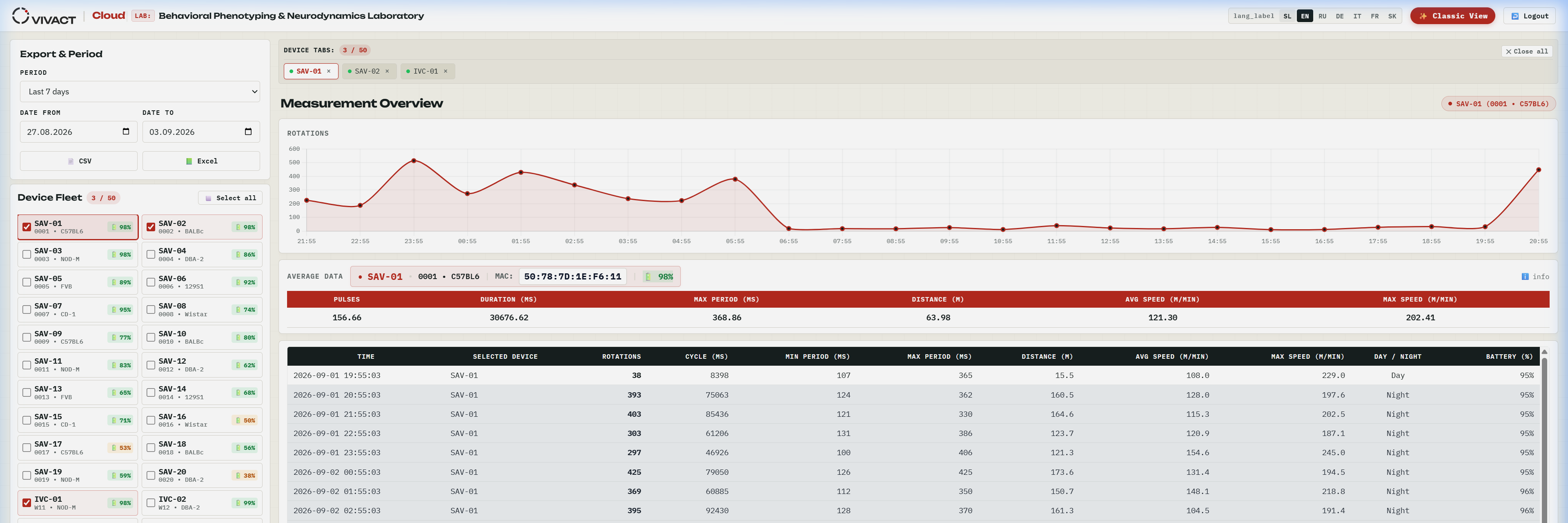
VivAct Cloud Platform: activity analytics, Day/Night phases, and telemetry
VivAct Cloud Web Platform: Day/Night phase analysis, rotational kinetics, battery monitoring, and direct CSV / Excel export.
CSV Column Measurement Method / Formula Analytical Significance & Interpretation
Series_Start Timestamp of first pulse in the bout Locomotor onset latency, circadian phase shift evaluation
Duration_ms Δt from first to last pulse (ms) Bout persistence (endurance and fatigue kinetics)
Distance_m Total pulses × 0.4084 m Total wheel distance accumulated in this bout (m)
Min_Period_ms min(t_i - t_{i-1}) between adjacent pulses (ms) Shortest inter-pulse interval; used for peak speed calculation
Max_Speed_m_min 0.4084 / (Min_Period / 60000) Peak instantaneous linear velocity (m/min)
Avg_Speed_m_min Distance / (Duration / 60000) Average linear wheel velocity within the bout (m/min)
Day_Night Photoperiodic phase flag (0 = Light, 1 = Dark) Circadian profile annotation for day/night rhythm analysis
WHEEL / 004 CAGE GM500 • MOUSE M1
ACTIVITY ACTOGRAM / 7 DAYS (00:00—48:00)
live telemetry
Dark phase (active) Light phase (rest) Running Bout
00:0006:0012:0018:0024:00
Seamless Analysis Integration (3 Lines of Code)
# Loading and analyzing VivAct telemetry in Python import pandas as pd df = pd.read_csv('vivact_data.csv') bouts_summary = df.groupby('Day_Night')['Max_Speed_m_min'].describe() print(bouts_summary)

Engineered for Grant Funding: No Hidden Subscriptions

Academic research funding relies on one-time equipment procurement (CapEx) rather than recurring annual software maintenance budgets. We cover cloud infrastructure costs, and offer an on-premise air-gapped server package for high-security facilities.

CapEx Friendly

One-Time Hardware Acquisition Instead of Annual Licensing

A transparent ownership model aligned with the realities of academic grant cycles and preclinical pharma budgets.

  • Clean Grant Budgeting

    The device is procured once as capital scientific equipment. Zero mandatory annual renewals, recurring fees, or paywalls to keep software running.

  • Free VivAct Cloud Included

    We handle server hosting and infrastructure costs. Cohort analytics web portal access and open raw data export are included without recurring fees.

  • Wear Parts at Base Cost

    PTFE sliding pairs, replacement axles, and chassis elements are supplied at direct service cost without proprietary lock-in markups.

The system will never "brick" after a grant cycle ends: wheels continue to record, synchronize, and export data permanently.
Architecture & Privacy

Where Daily Telemetry Is Sent — Exclusively Your Decision

The telemetry destination is configured once during initial setup via smartphone.

  • VivAct Cloud (Enabled by Default)

    The wheel autonomously logs locomotion to Flash memory, connects to Wi-Fi once daily for a few seconds, transmits the packet, and sleeps. Analytics are instantly accessible in the cloud.

  • VivAct On-Premise (Commercial Server Package)

    For secure vivariums, pharma NDAs, and strict data sovereignty: standalone software package deployable on your local server. Data never leaves your closed local network (Air-Gap).

  • Total RF Silence & Zero Web Servers on Device

    No vulnerable on-device web servers. The radio module remains powered off 23 hours 59 minutes per day — animals are completely isolated from electromagnetic background noise.

Single-step configuration: specify the destination endpoint once (Cloud or Local Server), and the system operates autonomously for years.

Applications in Preclinical Biomedical Protocols

Continuous longitudinal monitoring of voluntary running in oncology, aging, neurodegenerative models, and pharmacology.

01 / ONCOLOGY

Oncology & Cancer Cachexia

Objective monitoring of locomotor decline during tumor progression and therapy without transfer stress.

02 / GERONTOLOGY

Aging & Sarcopenia

Longitudinal tracking of motor performance: tracking average and peak speeds over multi-month protocols.

03 / NEUROSCIENCE

Neurodegeneration & Motor Control

Models of Parkinson's, Alzheimer's, and ALS. Low starting torque captures running even in ataxia and motor deficit.

04 / PHARMACOLOGY & CRO

Pharmacological Screening

Synchronous telemetry across rack deployments with open CSV export for easy LIMS integration.

Methodological boundaries.
Essential considerations.

Methodological Boundaries: Essential Considerations for Researchers

Accurate interpretation demands scientific rigor. Voluntary wheel running is an innate behavioral choice, not a direct proxy for maximal aerobic capacity.

01 / Voluntariness

Inter-Individual Engagement Variance

Limitation: Individual rodents show variable spontaneous activity, necessitating baseline acclimation and clear inclusion criteria.
VivAct™ Recommendation: Evaluate animals over a 3–5 day acclimation baseline to define protocol-specific engagement thresholds.
02 / Interpretation

Running ≠ VO₂max or Aerobic Fitness

Limitation: Voluntary distance and speed correlate with endurance but do not replace direct metabolic chamber oxygen consumption (VO₂max) or forced treadmill tests.
VivAct™ Recommendation: Use VivAct™ as a non-invasive longitudinal biomarker of locomotion. Combine with indirect calorimetry when absolute metabolic flux is required.
03 / Circadian Flag

Photoperiod Flag ≠ Sleep Quantification

Limitation: Absence of wheel rotation indicates resting or non-locomotor behavior, not true sleep architecture or sleep fragmentation.
VivAct™ Recommendation: The Day_Night variable serves as a photoperiodic reference tag for circadian profiling, not a somnological diagnostic tool.
04 / Aging Cohorts

Applicability in Severe Frailty Models

Limitation: In very aged or severely impaired animals (>18–22 months), voluntary wheel engagement may decline close to zero.
VivAct™ Recommendation: Assess baseline locomotor status in aging cohorts and consider custom low-inertia wheel configurations.

Engineered by Researchers in Biomechanics and Motor Control

Developed by an interdisciplinary team of physiologists, biomechanists, and engineers at S2P d.o.o. in Slovenia (EU).

Prof. Nejc Šarabon
R&D DIRECTOR • PRINCIPAL SCIENTIST

Prof. Nejc Šarabon, PhD

Scopus h-index: 33 • >300 peer-reviewed papers • >4,000 citations

Researcher and technology developer in biomechanics, motor control, and movement science. Author of over 300 scientific publications and over 4,000 citations (Scopus h-index: 33). Founder and head of R&D at S2P with many years of experience translating fundamental science into patented measurement systems and specialized research equipment.

S2P
SLOVENIA, EU • R&D & MANUFACTURING

S2P d.o.o. (Science to Practice)

Founded 2010 • Full in-house EU manufacturing • Precision biomechanics

Founded in 2010. Specializing in the design and production of precision biomechanical measurement devices and sensors for universities, research institutes, and clinical centers worldwide. Full engineering and assembly in Slovenia (EU).

Documentation and Frequently Asked Questions

Official datasheets, disinfection SOPs, and answers to core questions from researchers and vivarium managers.

DOCUMENT / PDF

VivAct™ Technical Datasheet

CAD blueprints, footprint (148 × 146 × 86 mm), telemetry specifications, and metrology standards.

Request Datasheet (PDF) →
REGULATION / PDF

SOP: Sanitation Protocol

Standard operating procedures for chemical wipe-downs (70% ethanol/IPA, QAC) and UV-C cycles.

Request SOP Document (PDF) →
DATASET / CSV

Telemetry Sample Dataset (CSV)

Structured dataset with 4,239 real running bouts for instant testing in R (tidyverse), Python, and Prism.

Download vivact_data.csv (41 KB) →
No. VivAct™ is a completely standalone, self-contained unit (148 × 146 × 86 mm) with a stable 520 g base. It rests directly on cage bedding in standard cages (validated for Tecniplast GM500) without external wires, antennas, or cage modifications. Our engineering team can verify compatibility with your cage model prior to ordering.
Yes. While VivAct™ is engineered for the tight clearances and ventilation of IVC cages, it operates seamlessly in any open or conventional cage with at least 140 mm internal height.
Yes. S2P provides custom engineering for larger rodents (rats) or specialized protocols, including scaled wheel diameters (up to 300 mm), wider running tracks, and adapted baseplates.
The electronic module is sealed in monolithic polymer resin, and the USB Type-C port is protected by a threaded cap with an O-ring. Disinfection is done via 70% alcohol or quaternary ammonium wipe-down and UV-C exposure. Autoclaving is strictly prohibited.
VivAct™ supports standard 2.4 GHz Wi-Fi 4 (802.11 b/g/n) with WPA2-Personal (PSK). For enterprise networks with 802.1X authorization, an isolated laboratory IoT VLAN is recommended.
Yes, but without individual RFID identification, the telemetry reflects total cage activity. For individual attribution, single housing or custom RFID integration is recommended.
The CSV table includes bout-level telemetry: Series_Start, Duration_ms, Distance_m, Min_Period_ms, Max_Speed_m_min, Avg_Speed_m_min, Day_Night photoperiod flag, and battery voltage.
In a 30-day continuous logging protocol, battery capacity decreased by only 20% (from 95% to 75%), yielding multi-month autonomy. Recharging is done via standard 5V USB Type-C under the sealed cap.
VivAct™ features on-board non-volatile Flash memory. Data is buffered locally and automatically synchronized to the cloud when connectivity is restored without data loss.

Connect with the VivAct™ Scientific and Engineering Team

Request an official technical datasheet (PDF), a commercial quote for your cohort size, or engineering consultation for cage adaptation.

⚙ Vivarium Deployment Pack:

  • Scalable Hardware Supply: tailored to your experimental cohort;
  • Standard Wi-Fi (2.4 GHz): direct connectivity to laboratory network (WPA2-PSK / IoT VLAN);
  • Type-C Charging: sealed with screw cap and O-ring gasket for chemical safety;
  • Analytics Platform: perpetual VivAct™ Dashboard license with CSV export.

📍 Manufacturer: S2P d.o.o., Slovenia (European Union)

✉ Direct Inquiries: support@vivact.science • info@s2p.si

🌐 Manufacturer Website: www.s2p.si

Request is submitted directly to S2P d.o.o. R&D team (Slovenia, EU).